Current Status & Market Context
StraitsX USD (XUSD) is a stablecoin that’s backed 1:1 by USD and operates under Singapore’s MAS regulatory framework. Right now, it’s trading at $1.00034775 USDT, showing a gain of roughly 4.58% over the last 24 hours. The coin is holding its peg pretty well, and recent activity from major exchanges like Binance and Bybit has helped boost trading volume and liquidity.
There’s some interesting news on the horizon too. StraitsX is planning to bring both XUSD and XSGD to the Solana blockchain sometime in early 2026. This expansion is all about tapping into Solana’s fast transaction speeds and low fees, which could really help with settlement use cases and strengthen XUSD’s position as a regulated stablecoin with institutional backing.
Technical Indicator Breakdown (4h & Daily)
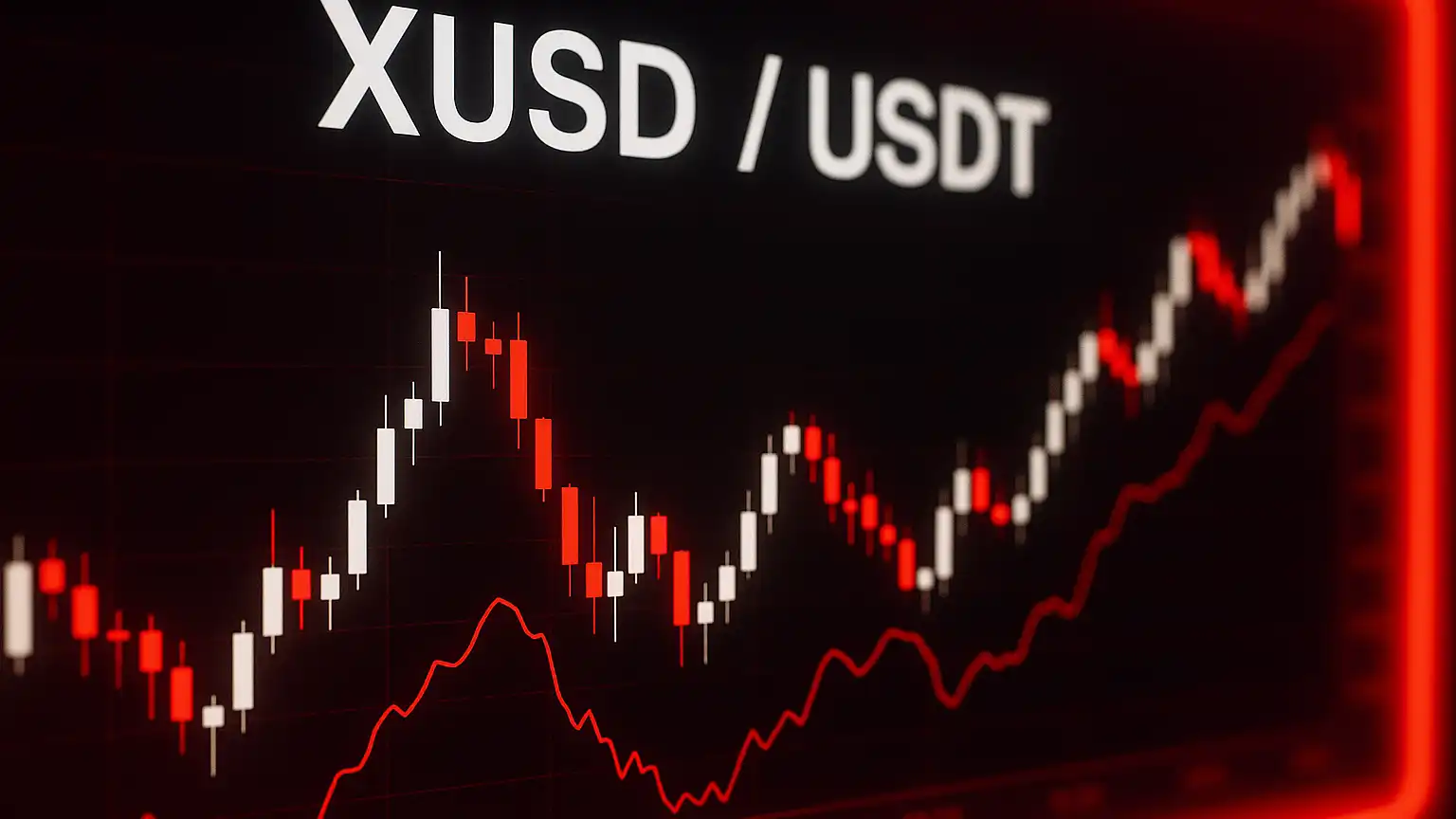
When you dig into the technical indicators for XUSD/USDT, you get a detailed look at what might happen in the near term and whether the price might drift from its $1 peg:
– 4-Hour RSI (Relative Strength Index): Sitting at around 46.01, which means it’s not overbought or oversold. Basically, momentum is pretty balanced right now without any strong directional bias.
– 4-Hour MACD: The MACD line is sitting just under the signal line (−0.00001987 versus −0.00001189), with a negative histogram showing. This points to a slight bearish divergence, though honestly, the magnitude is pretty minimal.
– Moving Averages (4-Hour): Both the SMA and EMA are hanging around 1.0007167 and 1.0007321 respectively—both slightly above where the price is now. That suggests there’s some short-term resistance just above the peg.
– Daily Pivot Points: The daily pivot is around 1.00076667, with resistance levels tightly packed between roughly 1.00103 and 1.00173. Support levels span from about 1.00033 down to 0.99963. This narrow range is pretty typical for stablecoins when they’re in corrective mode.
Interpretation of Technicals
Overall, XUSD is staying close to its $1 peg. The 4-hour MACD showing a minor bearish tilt, combined with the price trading a hair below those short-term moving averages, suggests there might be some weak downward pressure pushing toward the $0.9995–$1.0000 range if things get worse. On the flip side, there’s resistance just above $1.001 that could limit any bounce-back. We’re probably looking at price action between roughly $0.9996 and $1.0018 in the short term, assuming no major surprises.
Price Forecast & Scenarios for XUSD/USDT
XUSD’s whole purpose is stability—it’s not designed to appreciate much beyond tiny movements around $1. So predictions really come down to small fluctuations, potential regulatory or market events, and how the Solana expansion plays out.
– Base Case (1-2 weeks): Price probably stays between $0.9998 and $1.0015. There might be a slight drift downward toward $0.9995 if selling pressure picks up or liquidity thins out.
– Upside Scenario: If announcements about the Solana launch or major merchant integrations come through and accelerate adoption, the price could push toward resistance around $1.0017-$1.002.
– Downside Scenario: Things like regulatory crackdowns, big outflows, or concerns about the peg could drag the price toward support around $0.9990-$0.9995. But the peg mechanisms should kick in pretty quickly to stop any deeper slide.
Macro Drivers & Risk Factors
The bigger picture around stablecoins and on-chain fiat rails is pretty important context for XUSD. StraitsX already has the advantage of Singapore’s clear MAS regulatory framework, and adding Solana gives them more settlement options across different chains.
That said, there are some risks to keep in mind. Liquidity could become an issue if large exchanges or institutional players suddenly want to redeem big amounts. There have also been some community reports about operational hiccups like account freezes or KYC problems. Plus, there’s competition from other well-backed stablecoins like USDC that have huge market share.
What to Watch Next
– When and how smoothly the Solana integration rolls out, especially how well cross-chain swaps between XUSD and XSGD maintain the peg.
– Any announcements from major players like Grab or other merchants embedding XUSD into their payment systems—real-world usage typically helps keep the peg stable and improves liquidity.
– Regulatory changes in Singapore or across ASEAN that affect stablecoin frameworks, like reserve audit requirements or new compliance rules that could impact operating costs or user confidence.
– Volatility spikes in volume that might test those shallow resistance and support zones around $1.001 and $0.999.
Strategic Insight for Traders & Holders
For most people, XUSD works as a dependable store of value that stays glued to the US dollar, with minimal upside but also very limited risk as long as it stays within normal deviation ranges. Traders might find quick arbitrage opportunities between exchanges when volatility pushes the price above $1.001 or below $0.999, but you’ve got to watch out for fees and how the peg enforcement mechanisms react.
For institutions and developers, the long-term value in XUSD is probably in those expanding infrastructure rails—especially the Solana integration and merchant adoption. This shifts XUSD from being just another passive stablecoin into something more like programmable finance infrastructure. For these players, making sure counterparties and integrations line up with reserve verification and regulatory requirements becomes really important.