Current Situation & Market Context
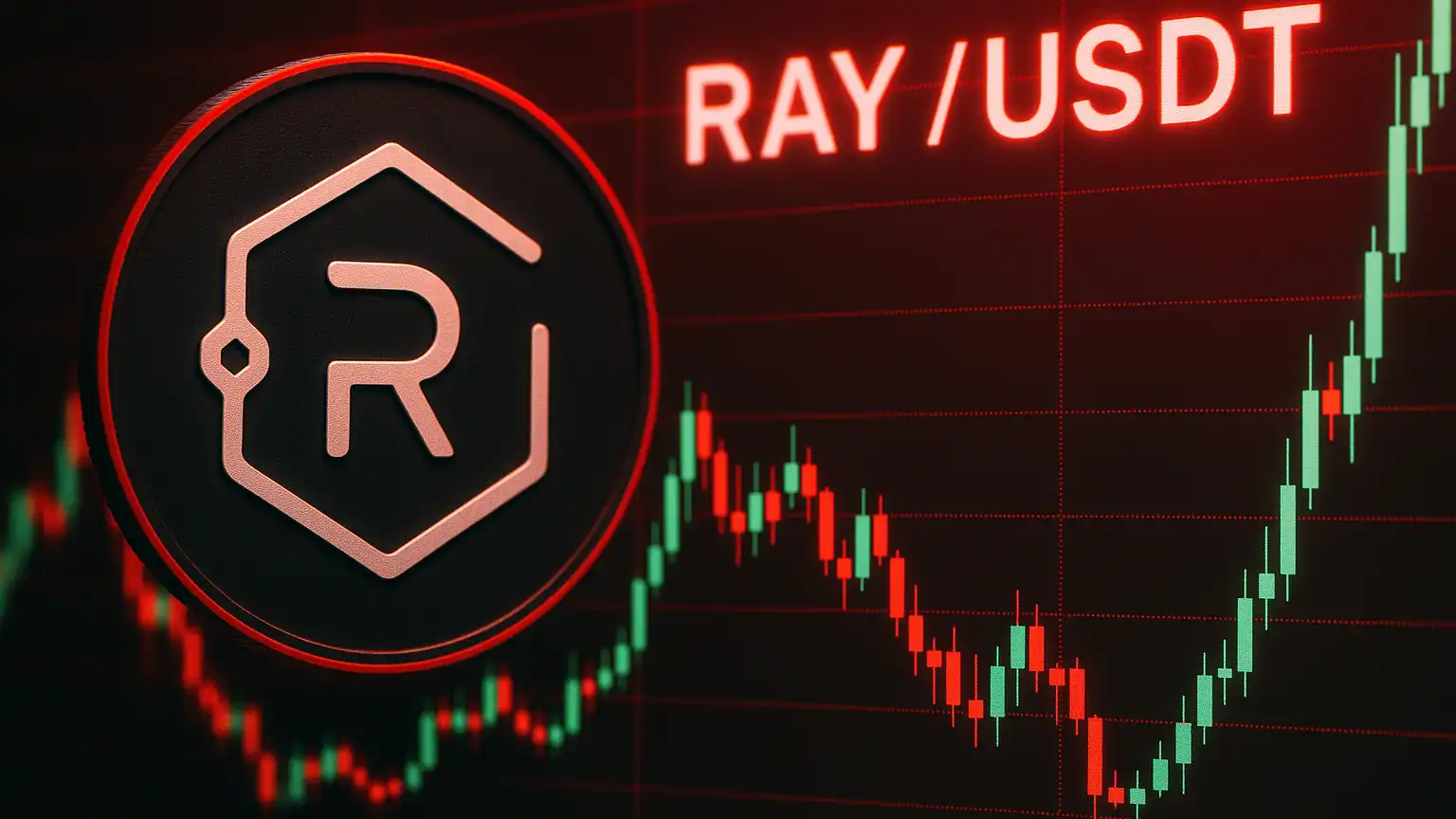
Raydium (RAY/USDT) is currently changing hands around $1.2155, showing a decent bounce of nearly 3.45% over the last day. The momentum picture on the 4-hour chart looks pretty encouraging—the RSI is sitting at roughly 60.54, which tells us there’s bullish energy without things getting overheated yet. The MACD is also painting a positive picture, with both the main line and signal line in positive territory and the histogram showing that upward momentum is actually picking up steam.
When we look at the daily pivot points, we can see a clear battlefield forming. On the upside, traders are watching resistance clusters around $1.226, $1.239, and $1.258. On the downside, support is stacked near $1.194, $1.175, and $1.162, with the pivot point itself anchored around $1.207. These levels are going to matter a lot if price decides to make a move in either direction.
Technical Indicators: Setup and Implications
Looking at the 4-hour moving averages, the Simple Moving Average is hovering near $1.1801, with the Exponential Moving Average just a hair below at around $1.1767. Since price is trading above both of these, it’s a decent sign that the short-term trend is leaning bullish. If we do see a pullback, these moving averages should provide some cushion and buying interest.
That said, we need to be a bit careful here. When you zoom out to the daily timeframe, things are looking a little stretched. The 14-day RSI has climbed up to around 75.8, which is getting into overbought territory. Other momentum oscillators like the Stochastic RSI, Williams %R, and CCI are all flashing similar warnings. Don’t get me wrong—momentum is definitely strong right now—but history tells us that when things get this hot, markets often need to take a breather before pushing higher.
Short-Term Scenarios
If the bulls keep their foot on the gas and manage to punch through that $1.226 resistance level with solid volume, we could realistically see a run toward $1.239 and maybe even $1.258. A clean break above those levels might open the door to $1.30 or beyond. On the flip side, if price can’t hold above the pivot support at $1.207—or worse, breaks below the moving average zone between $1.18 and $1.17—we’d probably see a slide toward the first major support near $1.194, with $1.175 being the next stop if sellers really take control.
Mid-to-Long-Term Price Projections & Key Drivers
When we look further down the road, the sentiment is cautiously optimistic. Several forecasts are pointing to average prices for 2026 landing somewhere between $1.16 and $1.81, with the upper end of that range being achievable if the broader market cooperates and Raydium’s fundamentals continue developing positively.
Some of the more bullish analysts are painting an even rosier picture. They’re suggesting that if Solana’s ecosystem continues gaining traction, if protocol integrations expand, and if features like yield farming and LaunchLab really take off, Raydium could potentially climb toward $2.50 to $5.00 during 2025. Of course, these more ambitious targets really depend on everything going right—favorable macro conditions, sustained DeFi enthusiasm, and no major hiccups along the way.
Fundamental Catalysts to Monitor
• What happens with Solana matters tremendously. Network activity, transaction fees, and overall reliability will directly impact demand for RAY since so much of Raydium’s functionality is built on that foundation.
• Keep an eye on how Raydium’s LaunchLab evolves and whether they successfully expand token-launch capabilities or add cross-chain features. These developments could meaningfully boost platform usage and token circulation.
• Liquidity conditions, any changes to token supply dynamics like buyback programs, and the general mood in DeFi markets will all play important roles in either amplifying or dampening the technical trends we’re seeing.
• Broader macro risks are always lurking. Interest rate changes, regulatory crackdowns, or market-wide crypto volatility could throw cold water on even the most bullish technical setups, especially when prices are already running hot.
Projected Price Ranges Based on Technicals
Taking everything into account—current price action, momentum readings, and those key support and resistance zones—here’s how things could potentially play out:
- Short term (days to roughly 2 weeks): Expect trading between $1.18 and $1.25. The moving averages around $1.18 should provide decent support, while the $1.226 to $1.239 zone represents the first meaningful resistance hurdle.
- Medium term (1-2 months): If the bullish tone holds up, we could see a gradual drift toward $1.30 to $1.35. However, if cracks start showing, a pullback toward $1.16 to $1.17 wouldn’t be surprising.
- Long term (3-6 months): Under the right conditions, breaking and holding above $1.40 would be a significant technical achievement. More realistic scenarios point to a range between $1.50 and $2.00 if fundamentals and macro conditions align favorably. If things don’t pan out as hoped, upside might stall closer to $1.80 with downside risk potentially pushing back toward the $1.10 to $1.20 area.