Current Market Landscape & Institutional Signals
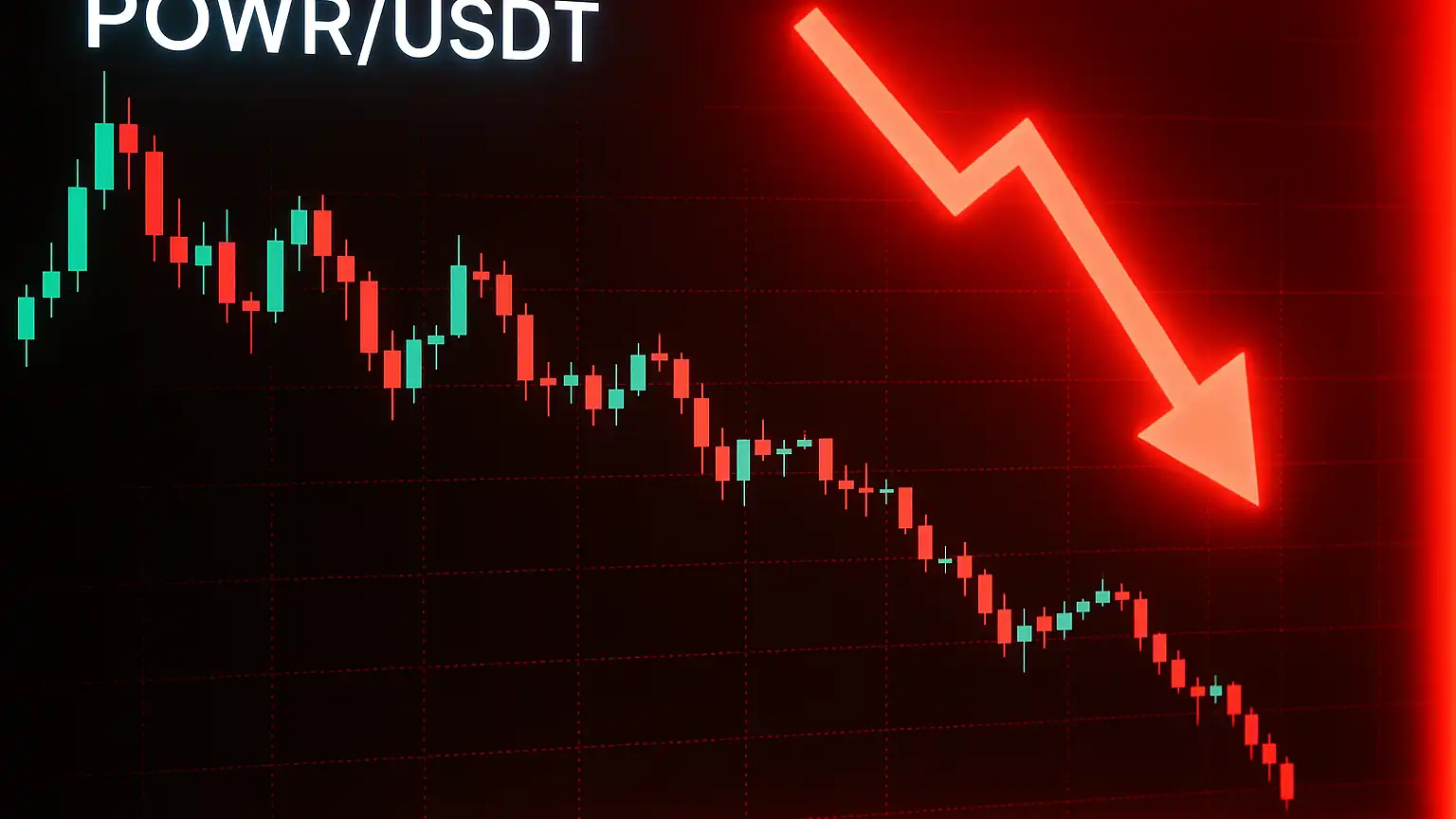
Right now, Powerledger’s POWR token is sitting at around $0.07567 USDT, down roughly –3.51% on the day. Looking at the 4-hour chart, the RSI has fallen into the low-20s (around 27.9), which tells us the asset is deeply oversold. Meanwhile, short-term trends aren’t looking great: the MACD line is sitting below its signal line with a negative histogram (about –0.00020), showing that sellers are still in control. Both simple and exponential moving averages are hovering above the current price in the $0.0802–$0.0811 range, creating a ceiling of resistance overhead and suggesting bulls haven’t been able to gain much traction lately.
When we look at daily pivot points, the picture stays pretty consistent. Key resistance levels (R1–R3) are stacked between $0.0763 and $0.0780, while supports (S1–S3) range from $0.0746 down to $0.0729. At the moment, POWR seems stuck below both immediate resistance and those short-term moving averages, with not much in the way of bullish momentum to push it higher.
Recent Developments & Broader Context
On a more positive note, Powerledger has been making some interesting moves to expand its reach across different blockchain networks. Earlier this year, POWR was listed on Solana-based decentralized exchanges like Raydium and Jupiter. This has helped boost liquidity and get the token in front of Solana users, while also tapping into the growing momentum around renewable energy finance, or “ReFi” as it’s being called. The token now lives on both Ethereum and Solana, with support from exchanges like BitMart, reflecting a dual-chain approach meant to increase accessibility and network effects.
That said, even with these infrastructure upgrades and new listings, the market hasn’t really responded. Trading volumes are nowhere near their past highs, the market cap has taken a serious hit over the last year or so, and price hasn’t been able to revisit old resistance zones. This lack of energy suggests either weak fundamentals or that investors are simply being cautious given the broader uncertainty in crypto markets.
Technical Price Prediction: Levels & Scenarios
Bearish Continuation Scenario
If things keep going the way they have been, POWR could test support around the $0.0746 mark (S1). If that level doesn’t hold, we could see it slide further toward $0.0735 (S2) and potentially down to $0.0729 (S3). We’d likely see this confirmed by the MACD staying negative with more red histogram bars piling up, and RSI potentially dipping even lower into extreme oversold territory. If supports start breaking, volatility could pick up as stop-loss orders get triggered along the way.
Bullish Reversal Potential
For a real bullish turnaround, POWR needs to first break back above that 4-hour moving average resistance sitting around $0.0802–$0.0811. A solid push above the $0.0805–$0.0810 zone, especially if it comes with healthy volume, could set the stage for a test of resistance between $0.0763 and $0.0780. We’d want to see momentum indicators catch up too: MACD flipping bullish by crossing above its signal line, and RSI climbing past the 40–50 range to show that selling pressure is easing off.
Neutral / Consolidation Outlook
After a sharp drop like this, it’s pretty common to see sideways movement before the next big move happens. POWR might just trade between resistance around $0.0780 and support near $0.0746–$0.0750 for a while. During this kind of consolidation phase, keep an eye out for tightening price action or narrowing ranges—these often come right before a breakout in either direction.
Final Takeaway & Risk Management
POWR is clearly under heavy bearish pressure based on the technicals, but being this oversold does open the door for a potential short-term bounce. Traders should watch closely to see if that $0.080–$0.081 resistance holds or gets broken through. If you’re thinking about entering a position, it might be worth waiting for some confirmation—like a MACD crossover paired with a lift in RSI—to improve your odds. At the same time, the downside risk is real: if support levels fail, the sell-off could accelerate. Managing position size carefully, placing stop-losses just below support, and keeping a close eye on volume will be key to navigating whatever comes next for POWR.