
Recent Developments and Market Context
Paycoin, trading under the ticker PCI/USDT, has been hovering around $0.06756 lately, showing a slight uptick of about 1.08% over the past 24 hours. The numbers paint an interesting picture—market cap sits somewhere between $70-75 million, while daily trading volume barely scratches $1 million. This thin liquidity is a double-edged sword, amplifying price swings in both directions and making downward pressure hit harder when investor sentiment turns sour. On the brighter side, there’s genuine progress happening on the ground in South Korea. Emart24’s integration brings Paycoin to over 3,600 convenience stores, and come September, PCI payment services are scheduled to come back online at major chains including CU convenience stores, Dalkomm Coffee, and Pizza Hut. These are real, tangible use cases that strengthen PCI’s value proposition, though the price action hasn’t caught up yet.
Looking ahead, PayProtocol has laid out an ambitious technical roadmap. They’re working on a Layer-2 payment scaling solution expected in early 2026, alongside stablecoin prepaid cards aimed at both local and international users. These developments could be game-changers, but there’s a catch—South Korean regulators are tightening the screws on virtual asset accounting and stablecoin oversight. This regulatory uncertainty hangs over the project like a dark cloud, potentially delaying timelines and inflating costs. So we’ve got this interesting tension: clear potential for growth clashing head-on with some serious technical and market headwinds.
Technical Indicator Analysis: Trend, Momentum, and Key Levels
The technical picture isn’t pretty right now. When you look at the daily charts, the bearish signals are practically shouting at you. Major charting platforms show almost every moving average—whether you’re looking at the 10-day, 50-day, or even the 200-day—flashing “Sell.” It’s hard to find a single “Buy” signal in the bunch. The oscillators tell the same story: MACD is trending down, ADX confirms a strong bearish trend, and the Commodity Channel Index has dropped deep into negative territory.
Support levels are critical here. The immediate floor appears to be around $0.0671, which has held up during recent trading sessions. If that cracks, the next safety net sits down at $0.0522. On the resistance side, traders will be watching $0.0811 for any near-term rallies, with $0.0918 marking the next hurdle beyond that. In a truly optimistic scenario, we might see a push toward $0.1325, but without a serious surge in volume, even breaking through that first resistance at $0.0811 looks like a tall order.
There are a couple of silver linings in the momentum indicators. The RSI is deeply oversold—sitting at extremely low levels—which typically hints at a potential short-term bounce. But here’s the thing: we’d need to see RSI find solid footing in oversold territory before any reversal becomes credible. Stochastic indicators are also showing oversold conditions, though they haven’t made bullish crossovers yet. The Average True Range suggests volatility could spike if price rebounds from support. Bottom line? The technical framework points to a bearish downtrend across both short and longer timeframes.
Short-Term vs. Mid-Term Scenarios
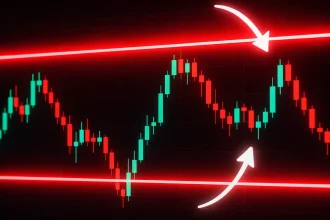
Over the next few weeks, expect PCI to trade in a relatively tight range between support at $0.0670 and resistance around $0.0800. We could see a relief bounce pushing toward $0.075–$0.080, but moving averages clustered in that zone will put up a fight. Any negative news—particularly around regulations or adoption delays—could snap that $0.0671 support level, potentially sending the price tumbling toward $0.0500.
Looking three to six months out, the story gets more interesting and depends heavily on execution. If PayProtocol delivers on merchant integrations and the new payment infrastructure starts gaining real traction, a recovery toward $0.0900–$0.1000 becomes realistic. On the flip side, if regulatory hurdles pile up or implementation gets pushed back, we might see PCI revisit levels below $0.0500, possibly testing those deeper support zones identified in longer-term bearish models.
Implications for Traders and Investors
For short-term traders looking to play this market, there’s opportunity here, but it comes with substantial risk. One approach might be entering near the $0.0670 support level with tight stop-losses just below $0.0600, aiming for a move up to the $0.0750–$0.0800 resistance zone. The key is waiting for volume confirmation before pulling the trigger. Positive catalysts—think merchant partnerships, coupon programs, or regulatory clarity—could provide the spark needed for a bounce.
If you’re in this for the long haul, keep your eyes on the roadmap milestones. What really matters is actual usage data: how many transactions are flowing through PCI-enabled point-of-sale systems, progress on stablecoin integration, and Layer-2 development. These factors will determine whether PCI evolves from a speculative token into a legitimate payment utility. Watch for three critical markers: first, maintaining compliance with South Korean regulations; second, hitting merchant rollout targets; and third, demonstrating real transaction volume rather than just marketing hype. These will be your signposts for PCI’s true potential.