Introduction: Recent Developments & Ecosystem Drivers
Kinetiq is making waves as a liquid staking protocol on Hyperliquid’s Layer-1 blockchain, and the past six months have been packed with action. Back in October 2025, the team rolled out their native governance token, KNTQ. They distributed a quarter of the total 1 billion token supply through airdrops—24% went to kPoints holders and 1% to Hypurr holders who’d been actively participating in the community. The remaining tokens were divided among core contributors, the foundation, investors, and liquidity pools, all locked under vesting schedules that stretch over several years. The whole point was to spread out control and get more people involved in steering the protocol’s direction.
But Kinetiq isn’t stopping at liquid staking. They’ve launched “Markets,” their first decentralized exchange, built through their Launch platform following Hyperliquid’s HIP-3 guidelines. This new exchange is designed to handle perpetual contracts for all sorts of assets—think energy indices, equities, even commodities. On top of that, they’re putting together a revenue-sharing setup that includes token buybacks and staking rewards, which should make holding KNTQ more attractive. Right now, Kinetiq pretty much dominates the liquid staking scene on Hyperliquid, holding somewhere between 70% and 80% of the market. Estimates for Total Value Locked vary quite a bit—you’ll see numbers ranging from around $700 million to over $2 billion, depending on whether people are counting kHYPE market cap and what methodology they’re using.
Technical Price Analysis & Indicator Signals
Looking at where KNTQ stands right now, the price is sitting around $0.1453, and it’s taken a hit of nearly 6% over the last 24 hours. That’s giving off some short-term bearish vibes. Let’s break down what the technical indicators are telling us based on the most recent data:
Moving Averages & Support/Resistance Levels
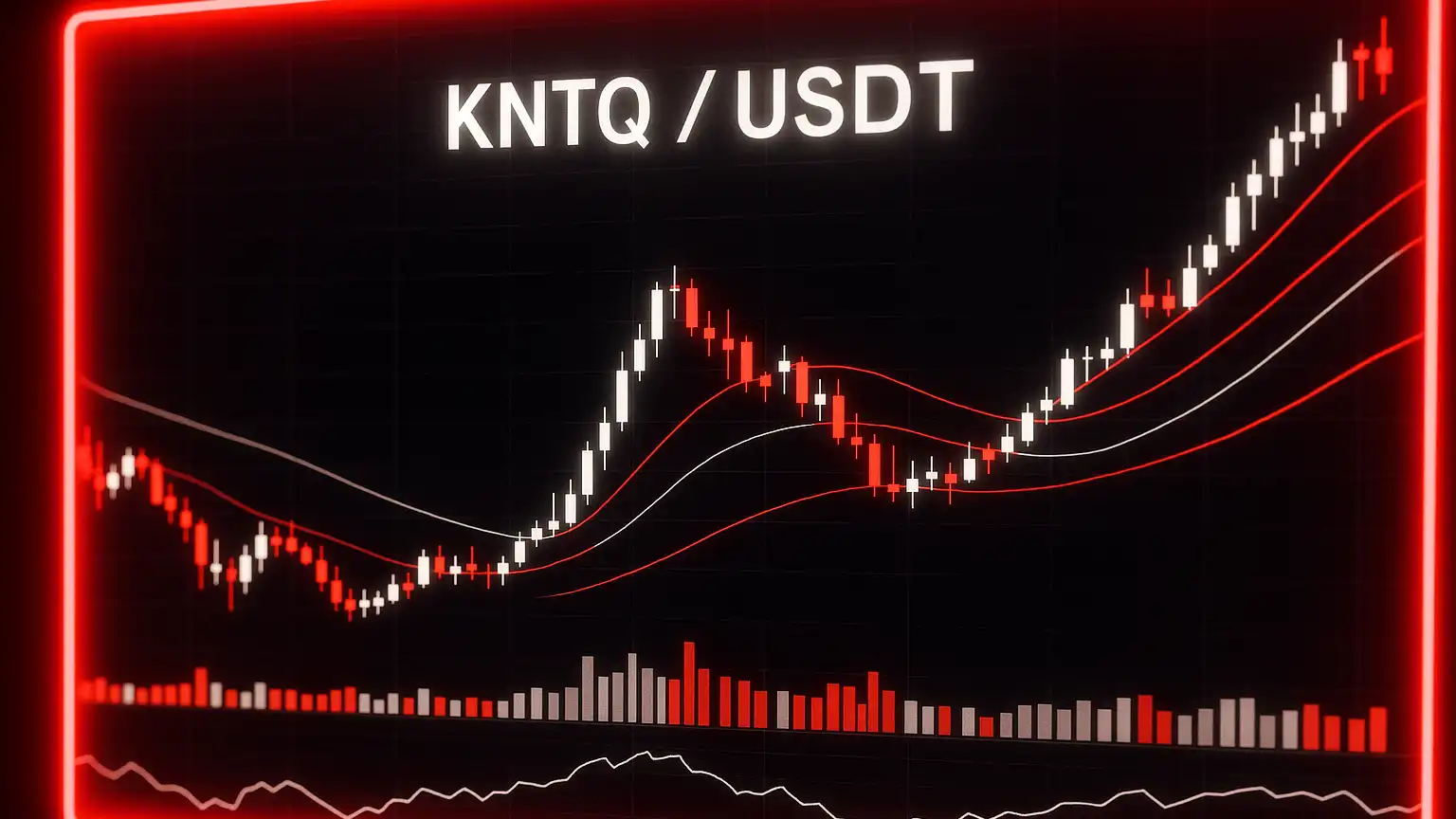
The 50-day moving average is currently sitting above the current price, which means it’s acting like a ceiling that’s tough to break through. The 200-day moving average is trending upward but also hovers above where we are now—that’s creating a pretty significant resistance zone around that long-term average. If you look back at the price history, there’s a solid support zone between $0.12 and $0.14 where we’ve seen buyers step in before, backed by decent trading volume. If the price dips toward $0.12, we might see those buyers show up again. On the flip side, if KNTQ tries to push above $0.18 to $0.20, it’s probably going to run into some serious resistance.
Momentum: RSI, MACD, and Divergence Signals
The Relative Strength Index, measured over a 14-day period, has been hanging out in or near oversold territory—that’s below the 30 mark. Generally speaking, when RSI gets this low, it hints that a bounce could be coming if buyers start getting interested again. What’s more interesting is that there seems to be a bullish divergence forming: while the price keeps making lower lows, the RSI is actually making higher lows. Traders often see this pattern as a warning sign that a turnaround might be brewing.
As for the MACD, things look bearish at the moment. The MACD line is still below its signal line, and the histogram keeps showing negative bars. We haven’t seen that bullish crossover yet, though with the momentum divergence happening, we could potentially see one if trading volume picks up. Until that crossover actually happens, though, the overall trend is still looking weak.
Price Forecast Scenarios: What the Data Suggests
Given what the indicators are showing us right now, there are basically two paths KNTQ might take over the next few weeks:
Base Case: Consolidation with Mild Recovery (Next 2-4 Weeks)
If the price manages to stay above that key support level around $0.12 to $0.14—which seems plausible given the oversold RSI and that divergence we talked about—KNTQ will probably spend some time consolidating between $0.12 and $0.17. A bounce up toward $0.16 to $0.18 seems reasonable if we start seeing some buying volume come back in. From there, the price might try to test $0.20, but it could easily get rejected at that level unless we get some help from the broader crypto market rallying or some positive news dropping about the project.
Bearish Risk: Breakdown and Further Correction
Now, if that support around $0.12 doesn’t hold—maybe because the whole crypto market takes a dive or something negative happens with the project—KNTQ could slide down toward $0.08 to $0.10. In that scenario, the 200-day moving average would still be overhead acting as resistance, and both the MACD and RSI would probably stay in negative territory. Without a surge in trading volume or some kind of external catalyst, any recovery would likely take a while to materialize.
Utility, Tokenomics & Long-Term Implications
Looking beyond just the day-to-day price movements, what really matters for KNTQ is what the token actually does. The team is building out a solid value proposition with staking rewards, buyback programs, governance rights, and revenue from their upcoming DEX and other HIP-3 products. This creates a positive cycle where more utility leads to stronger demand, which should eventually show up in better technical indicator readings.
Keep an eye out for major announcements—new assets being listed on “Markets,” strategic partnerships, or transparent reports about revenue. Any of these could act as catalysts that move the price. For anyone holding or trading KNTQ, it’s worth paying attention not just to traditional chart indicators but also to on-chain data like staking participation rates and buyback volumes. These metrics will tell you whether KNTQ is successfully transitioning from being just another speculative token to becoming a genuine utility asset with real staying power.