Recent News & Ecosystem Dynamics
InitVerse has made some pretty significant moves lately, starting with a major strategic investment from the Tabula Rasa Foundation. We’re talking about 500 BTC—that’s roughly $10 million at initial disbursement—with the funds released based on hitting specific project milestones. What’s really interesting here is that a chunk of this capital is earmarked for buying back 50 million INI tokens from major exchanges, over-the-counter channels, and partner networks. The goal? Boost token value and improve liquidity. This kind of institutional backing isn’t something you see every day, and it definitely shows confidence in the project’s direction.
Beyond the financials, InitVerse has been busy expanding its global footprint. They made waves in the Middle East during TOKEN2049, where they demonstrated their TFHE-based dynamic privacy computing technology. During the event, they inked preliminary cooperation agreements with local institutions interested in compliant applications for healthcare and finance. These aren’t just flashy announcements—they point toward genuine real-world utility that could drive adoption down the line.
On the technical development side, InitVerse rolled out its “IIP-003” protocol upgrade on **August 8, 2025**. This wasn’t just a minor tweak—block times dropped dramatically from 30 seconds to 10 seconds, block rewards were slashed from 780 INI down to 227 INI, and halving cycles got extended from 20,160 blocks to 60,480 blocks. The team managed all this while keeping annual inflation under control. What does this mean for token holders? Greater long-term scarcity and improved utility.
The total supply cap stays fixed at 6 billion INI. The inflation model is designed so that roughly 12% of the supply gets released in year one, with half of all tokens mined by year five, and full emission stretched over about 40 years. Plus, the project implements token burns approximately every seven days, which helps keep circulating supply in check.
All of this sets up a potentially bullish scenario, though we shouldn’t ignore short-term volatility risks. The buyback execution timing, actual user adoption metrics, and broader macroeconomic conditions will all play crucial roles in how things unfold.
Technical Indicators & Price Behavior
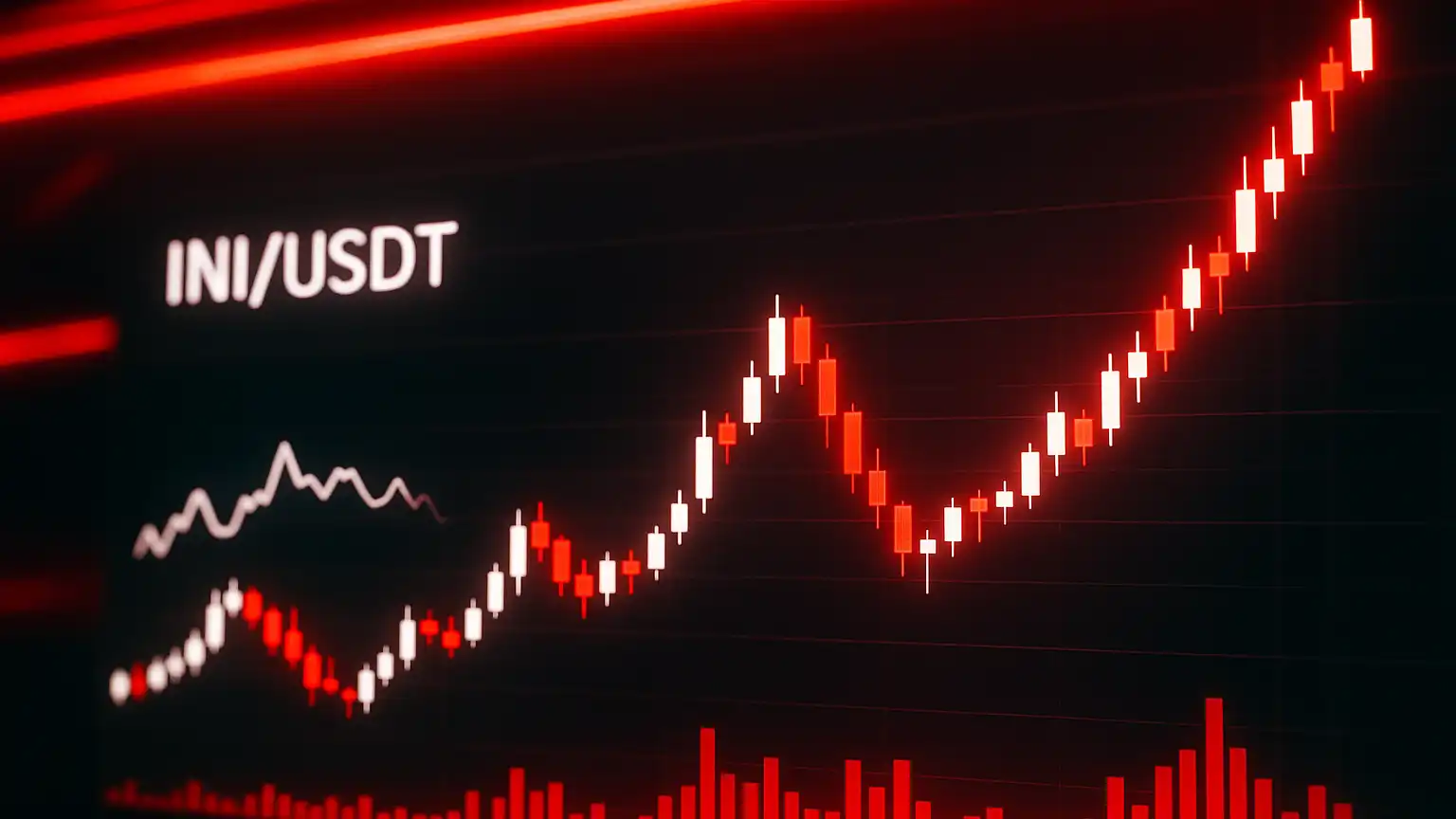
Right now, INI/USDT is trading around $0.12176, showing a modest 24-hour gain of about 1.42%. According to data from CoinCodex, the price has been hovering near its 52-week high of $0.1378, with a cycle low around $0.1195. Basically, we’re seeing the market squeeze between support near $0.12 and resistance around $0.1375—a tight range that could break either direction.
When you look at Bitget’s technical ratings for the daily timeframe, the picture is mixed. The overall summary leans neutral, with moving averages showing more “Sell” signals (8) than “Buy” ones (6), while oscillators are mostly neutral with a slight negative tilt. The RSI(14) sits at roughly 43.6, which is below the midpoint—indicating mild bearish momentum without being oversold territory. Meanwhile, the ADX is around 34.6, suggesting trend strength is building. Other indicators like MACD are flashing weak sell signals as well.
Short-term moving averages tell an interesting story. Several EMA/SMA pairs (10, 20, 30 periods) are positioned below the current price, which adds some downside risk in the near term. However, the longer-period moving averages (50, 100, 200) remain supportive below current price levels, which tends to provide a floor and hints at a longer-term bullish structure.
Volume has been moderate, but volatility is definitely elevated. This combination means that when price does break out—or break down—the moves could be sharp and fast. Sentiment readings show low Fear & Greed levels, pointing to pessimism in the market. While that might sound bad, it can actually set the stage for a reversal if positive catalysts come into play.
Support, Resistance & Key Price Zones
There are several critical levels traders should keep an eye on:
• $0.1200–$0.1220: This has been acting as a recent floor where price has tested and bounced multiple times.
• $0.1100: A secondary support level that lines up with the 50-day moving average.
On the resistance side:
• $0.1350–$0.1380: Recent highs that the price has struggled to break through. A clean break above this zone with solid volume could open the door for further upside.
• $0.1500: A nice round psychological barrier that becomes the next target if bullish momentum really kicks in.
The risk here is that if price can’t hold above $0.1200, we could see a slide toward $0.1000–$0.1050 if selling pressure increases.
Price Prediction Scenarios
Based on what we’re seeing in the charts and the fundamentals, here are two realistic scenarios for INI/USDT over the next month or two:
Bullish Case: If that buyback program starts making waves with real volume, and we get some concrete announcements about successful partnerships—especially in areas like compliance, payments, or privacy computing—INI could punch through that $0.138 resistance. Once it clears that hurdle, a move toward $0.150–$0.160 looks entirely feasible. For this to happen, we’d need to see breakout volume significantly above recent averages and price holding firmly above $0.1300.
Bearish Case: On the flip side, if momentum stalls out, those moving averages continue acting as resistance, or the broader crypto market takes a hit—say Bitcoin drops hard—then price could slip below $0.120. If that happens, the next solid support sits around $0.100–$0.105. A breakdown through that level could trigger a wave of stop-losses, potentially pushing price down toward $0.080 as nervous holders exit their positions.
Longer-Term Outlook & Considerations
Looking out over the next six to twelve months, there are several factors that could reshape INI’s value proposition. The protocol’s faster block times, extended halving periods, transition to community governance, and global expansion efforts could collectively boost both utility and demand. If developer adoption picks up steam—particularly in regulated sectors like healthcare and finance—the underlying use cases could support sustained buying pressure. That said, the token issuance mechanics, how effectively the burn mechanism works, and macroeconomic headwinds like interest rate changes or regulatory crackdowns will all be crucial determining factors.
Smart investors will want to keep tabs on quarterly reports showing network activity, dApp usage statistics, and transparency around how that buyback program is being executed. Mining economics matter too—especially with products like INIBOX or similar ASIC hardware. Mining profitability directly influences how much sell pressure hits the market and affects overall supply dynamics.
From a risk-adjusted perspective, INI looks interesting if it can hold those support levels and positive catalysts start materializing. But given the elevated volatility, protecting your capital around those key support zones isn’t optional—it’s essential.