Recent Regulatory and Market News Framing GUSD
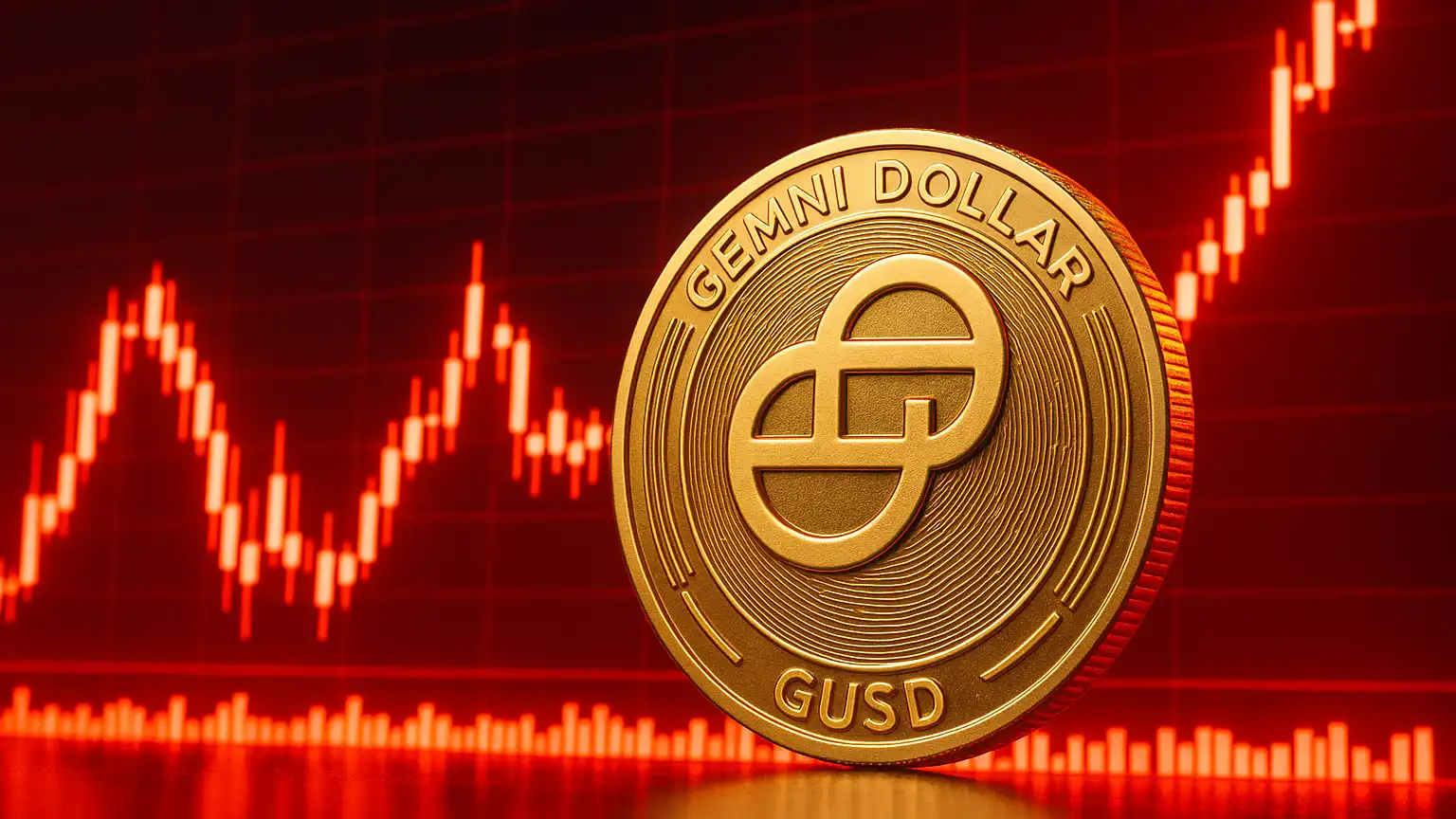
Gemini Dollar (GUSD), the regulated stablecoin from Gemini, has been riding a wave of increasingly solid regulatory backing in the United States that really strengthens confidence in its dollar peg. What’s particularly interesting is that the New York State Department of Financial Services rolled out new rules requiring stablecoin issuers—yes, including Gemini—to maintain 100% reserve backing at the close of every single business day. And these reserves need to be fully auditable, redeemable on demand, and completely transparent. That’s a big deal because it dramatically cuts down on counterparty risk and eliminates any mismatch between the tokens out there and the actual assets backing them.
Then there’s the GENIUS Act, which became law on July 18, 2025. This legislation is pretty significant—it requires stablecoins to be backed one-to-one with U.S. dollars or similarly safe assets, establishes federal oversight working alongside state regulators, and calls for monthly audits. All this regulatory clarity really favors compliance-focused stablecoins like GUSD compared to more loosely backed options or those algorithmic experiments we’ve seen blow up before.
That said, GUSD has seen a tiny bit of weakness in the last 24 hours. Right now it’s trading at about $0.9989 against USDT—down roughly 0.023, or about 2.3% over the day. This small dip likely points to some temporary stress or arbitrage activity, but honestly it’s pretty minor compared to the wild swings you typically see elsewhere in crypto.
Key Technical Indicators: Stability Tested, Slight Pressure
Since GUSD is a stablecoin, it’s built to hover right around that $1.00 mark. The usual technical analysis tools like moving averages or momentum oscillators don’t really tell you much with stablecoins, but they can still highlight short-term deviations or moments when the peg gets tested.
At $0.9989, we’re looking at just a 0.2% slip from the dollar peg. Moving averages aren’t particularly useful here given GUSD’s design, but you can still spot intraday liquidity quirks or arbitrage opportunities popping up on exchanges and DeFi platforms. If you checked the RSI, it’s probably sitting somewhere neutral since there’s no real directional momentum. Volatility measures like standard deviation over short periods should be extremely low, exactly what you’d expect from a stablecoin trying to minimize price swings.
Still, you might see some short-term downward pressure if there’s a sudden rush of redemptions, fresh regulatory uncertainty, or competition from other well-backed stablecoins offering better yields. Price spreads across exchanges, or the basis between GUSD/USDT versus direct GUSD/USD redemption through Gemini’s trust structure, could widen temporarily when things get a bit tense.
Support and Resistance Zones (Operational)
Support for GUSD’s peg is essentially built in at $1.00, backed up by the reserve redemption mechanism. Rather than traditional chart-based support levels, we’re really talking about psychological and structural floors here. There’s barely any resistance above $1.00 since market makers will jump in to arbitrage away any premium immediately. If the price climbs above $1.005 or drops below $0.995, you can bet arbitrageurs and institutional traders will pile in to push it back toward parity.
What to Expect: Price Prediction and Risk Scenarios
Because of what GUSD is, long-term price predictions don’t really follow the usual chart patterns you’d use for other cryptocurrencies. Looking ahead over the next month, assuming the reserve backing stays solid and the regulatory landscape remains stable, GUSD should trade in a super tight range: somewhere between $0.995 and $1.005. Any moves outside that band will almost certainly trigger immediate arbitrage trades and corrective pressure.
Over the next three to six months, as long as we don’t see any major systemic shocks—think banking crisis, sudden regulatory changes, or a collapse in confidence around stablecoin reserves—GUSD should maintain that tight peg, probably staying between $0.998 and $1.002. You might see a slightly positive premium if usage in yield-generating protocols or lending platforms picks up, especially if users chase returns, but arbitrage will likely keep any premium in check.
Now, in a worst-case scenario—let’s say a major issuer defaults, regulations get rolled back, or people lose faith in the redemption process—the price could temporarily drop to around $0.985 before the reserve redemption mechanism and regulatory intervention kick in to restore value. But honestly, the odds of that happening are pretty low given the current level of oversight. On the flip side, seeing GUSD trade above $1.02 is equally unlikely unless there’s some extraordinary surge in demand, and even then premium holders would immediately sell to lock in that profit and bring it back to parity.