Current Fundamentals & Market Context
Right now, GEODNET is trading around $0.14450 per GEOD against USDT, showing a modest 24-hour gain of roughly +1.66%. While we don’t have a ton of fresh candle data from the major exchanges, the broader technical picture points to bullish momentum building from moving averages and momentum indicators. What’s really interesting though are the on-chain metrics: GEODNET’s Real-Time Kinematic (RTK) network has grown to over 20,400 miners across 152 countries, pulling in close to $6.83 million in annual recurring revenue. Here’s the kicker—they’re running a deflationary model where 80% of data revenue gets funneled into buybacks and token burns, actively shrinking the circulating supply.
The project’s governance and funding situation looks pretty solid too. GEODNET just closed an $8 million strategic funding round led by Multicoin Capital, with backing from ParaFi and DACM. This capital is earmarked for pushing enterprise adoption in robotics and AI, and building out the infrastructure needed for precision applications. The fact that heavyweight investors are putting serious money behind it speaks volumes about GEODNET’s potential in the DePIN space, especially given the growing demand for centimeter-accurate positioning in everything from farming drones to autonomous vehicles and industrial use cases.
Technical Indicator Driven Momentum & Key Levels
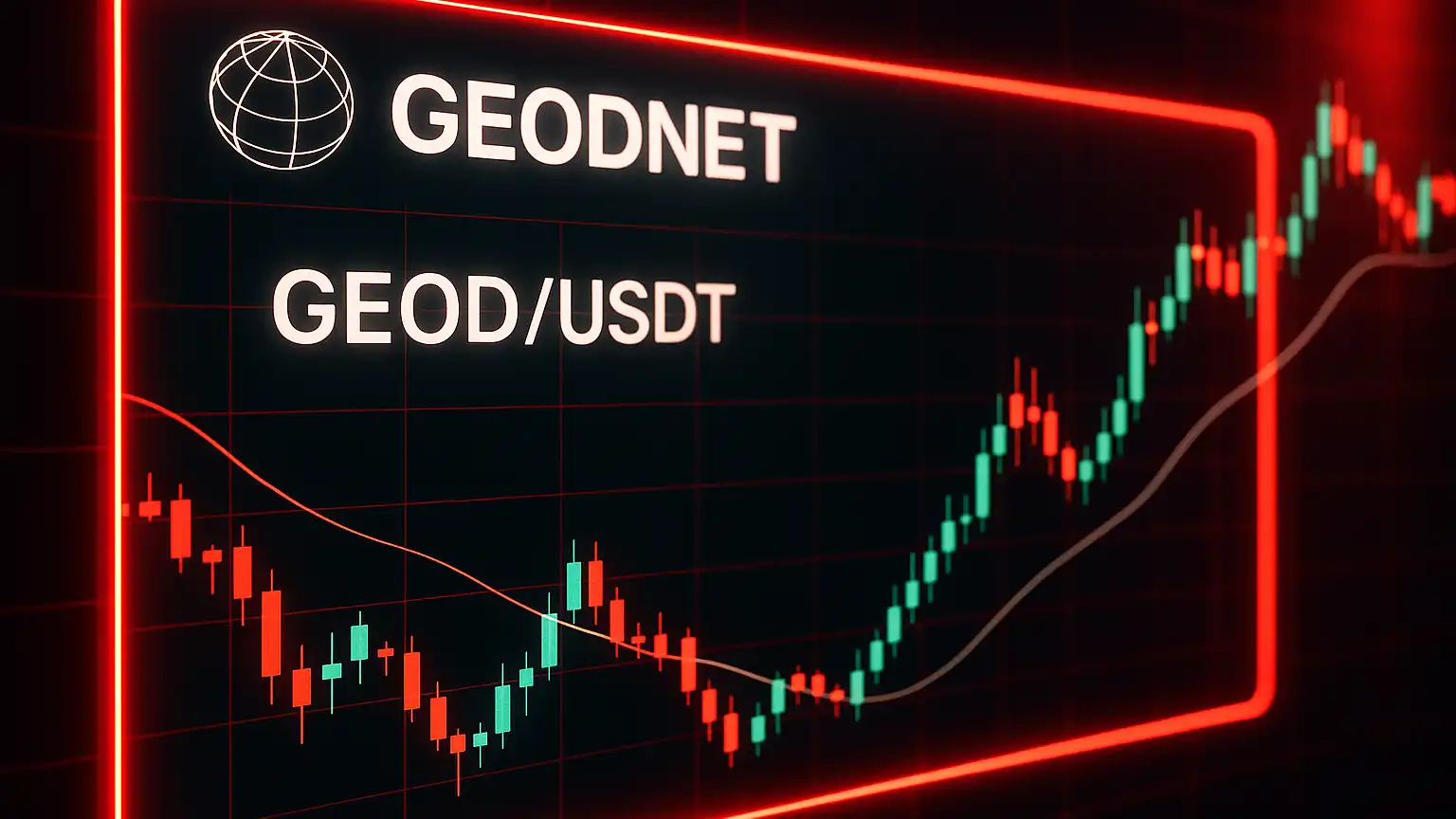
Looking at the technicals, moving averages and momentum oscillators are leaning bullish, though we’ve got some near-term resistance and broader market headwinds to contend with. On the daily charts, the simple and exponential moving averages—MA5, MA10, and MA20—are currently sitting just below the price, suggesting GEOD recently broke above those levels. That’s usually a good sign. The RSI is hovering in the 50-60 range, which means we’re in neutral-to-slightly bullish territory without being overbought yet. The MACD histogram looks like it might be starting a bullish crossover, but we’ll need to see confirmation.
The main resistance zone sits around $0.150-0.155, where several fibonacci retracement levels and longer-term moving averages come together. On the downside, support appears firm in the $0.130-0.135 area—this is where we’ve seen accumulation before and where moving average bands have held during previous pullbacks. One thing worth watching: volume spikes tied to on-chain events like major token burns or enterprise announcements have historically preceded upward breakouts, so keeping an eye on volume is crucial here.
Short-Term Price Prediction (Next 2-4 Weeks)
If GEOD can hold support around $0.135 and the moving averages continue trending upward, we could see a push toward $0.155 in the coming weeks. Of course, this depends on the overall crypto market staying reasonably healthy and continued positive news from the enterprise side. If we see a clean break above $0.150 with strong volume, $0.165 isn’t out of the question. On the flip side, if support fails and we drop below $0.130, we might see a pullback to the $0.115-$0.120 range, especially if the broader altcoin market turns sour.
Medium-Term Outlook & Key Risk Factors
Looking out over the next 3-6 months, GEOD’s price movement will probably be driven more by fundamentals than pure chart patterns. There are several bullish catalysts on the horizon: expansion of enterprise RTK clients, growing adoption in emerging markets like India and South America, better implementation of staking or performance-based rewards across the RTK network, and continued aggressive token burns that push supply growth into negative territory.
That said, there are real risks to consider. Broader macroeconomic pressure on crypto markets could drag GEOD down regardless of its fundamentals. Regulatory uncertainty around DePIN operations and cross-border data services is another wildcard. Infrastructure deployment could face delays—whether that’s new station rollouts or staking implementation. There’s also competition from other geospatial and location networks to think about. And finally, if burn rates slow down or revenue growth stalls, GEOD could face selling pressure even if the technical setup looks good on paper.