Recent Price Action and Fundamental Context
UNS Token has been through quite a rollercoaster lately. Trading on Binance Smart Chain, this utility token aims to bridge real-world sectors like agriculture, healthcare, education, solar energy, and exchanges. But the price action? It’s been all over the place.
Right now, UNS is sitting at around $0.2536 with a market cap hovering near $26.8 million. There’s roughly 105.6 million UNS in circulation out of a maximum supply of 1 billion tokens. That means the fully diluted valuation is significantly higher than what we’re seeing today.
The token hit its all-time high of about $0.30 back on October 20, 2025. Then things went south—fast. We’re talking about a massive drop that bottomed out at approximately $0.0001. Ouch.
The good news? Recent trading suggests a potential rebound is forming. The bad news? Volume is painfully thin, and investor confidence is still pretty shaky.
Technical Indicators & Short to Mid-Term Forecast
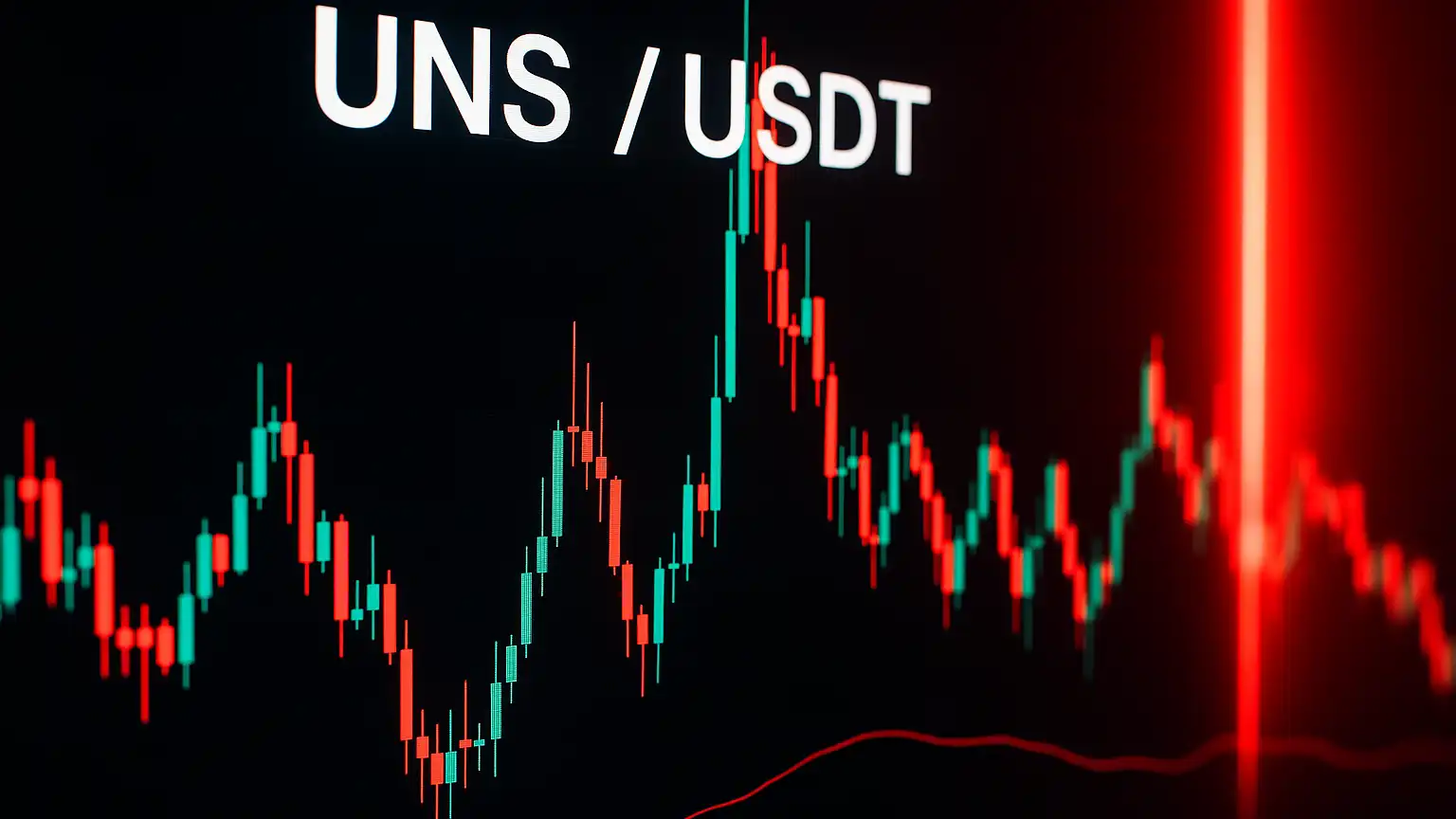
When you look at the charts, the picture isn’t exactly pretty. Technical analysis points to a bearish trend that’s still very much in play. Both the 50-day and 200-day moving averages are sitting above the current price, acting like a ceiling that UNS keeps bumping into.
The 200-day simple moving average is projected to be near $0.1365 by early January 2026, with the 50-day not far behind. These are your key resistance zones to watch. Most forecasts expect UNS to trade somewhere in the $0.14 to $0.16 range through late January and into early February. If those resistance levels hold firm, we could see things slide back down to around $0.12.
The Relative Strength Index is giving us mixed signals. Some indicators show oversold conditions, which usually means a short-term bounce could be coming. But the overall trend strength is weak, and volatility remains elevated—not exactly confidence-inspiring.
Support levels are likely to form around $0.12 to $0.14. Resistance? That’s clustered near the old high of $0.30 and those moving average lines around $0.136 to $0.15. For UNS to seriously challenge the high $0.20s again, we’d need to see a clean break above resistance backed by genuine buying volume.
Scenarios Based on Market Behavior
Bullish scenario: If buyers actually show up and push through that $0.14 resistance, UNS could make a run at the $0.20+ zone. Getting all the way to $0.25-$0.30 would take sustained volume, a shift in sentiment, and probably some positive news about utility partnerships or real-world adoption in those sectors UNS is targeting.
Bearish scenario: If UNS can’t hold above $0.12, we’re looking at retests of lower levels. Given how sharply this token has dropped before, breaking below $0.10 could trigger a cascade of stop-losses. That could drag the price down to single-digit cents, especially if liquidity dries up or exchanges see unusual activity.
Risk Factors and Strategic Implications for Traders
Let’s talk risk, because there’s plenty of it here. The biggest issue is the extremely low trading volume relative to the token supply. This creates massive slippage and can amplify losses during sell-offs. When liquidity is this thin, even technical breakouts and breakdowns don’t work as reliably as they should.
Sentiment is another concern. Sure, oversold indicators suggest a bounce might be coming, but after hitting all-time lows, traders tend to stay cautious. Any negative macro news or regulatory developments could easily derail any recovery attempt. Plus, there’s a huge gap between the current price and the all-time high, which means lots of bagholders looking for an exit.
If you’re thinking about entering a position, consider scaling in gradually with limit buy orders around $0.12-$0.14. This helps reduce your risk. Keep your stop-losses tight—below $0.10 is probably smart. And if you’re in it for the long haul, you’ll need to watch whether UNS can actually deliver on utility partnerships and adoption. Without that, the valuation is purely speculative.