
Recent News & Fundamental Drivers
Bitlayer has been making waves lately thanks to solid backing from major institutions and some impressive tech progress. The project pulled in $25 million from heavy hitters like Polychain Capital, Franklin Templeton, and OKX Ventures—which definitely adds credibility and firepower for future development. Since launching its mainnet in 2024, it’s processed over 71 million on-chain transactions and hit nearly $900 million in total value locked, putting it right up there with the top Bitcoin Layer-2 networks.
A couple of other things have really helped strengthen the fundamentals here. First off, they rolled out their tokenomics plan with a hefty 40% going toward ecosystem incentives and 7.75% for node rewards. Second, they switched their cross-chain infrastructure over to Chainlink CCIP, which is a big deal for security and interoperability—particularly when it comes to assets like YBTC.
Market sentiment has really shifted in Bitlayer’s favor over the past few weeks. We saw a massive breakout with prices jumping about 55% in just 24 hours—going from around $0.09 to $0.14—backed by seriously high trading volume. This wasn’t just speculative hype; it looked like genuine buying pressure. All signs point to growing confidence from investors.
Technical State: Chart Structure, Momentum, and Key Zones
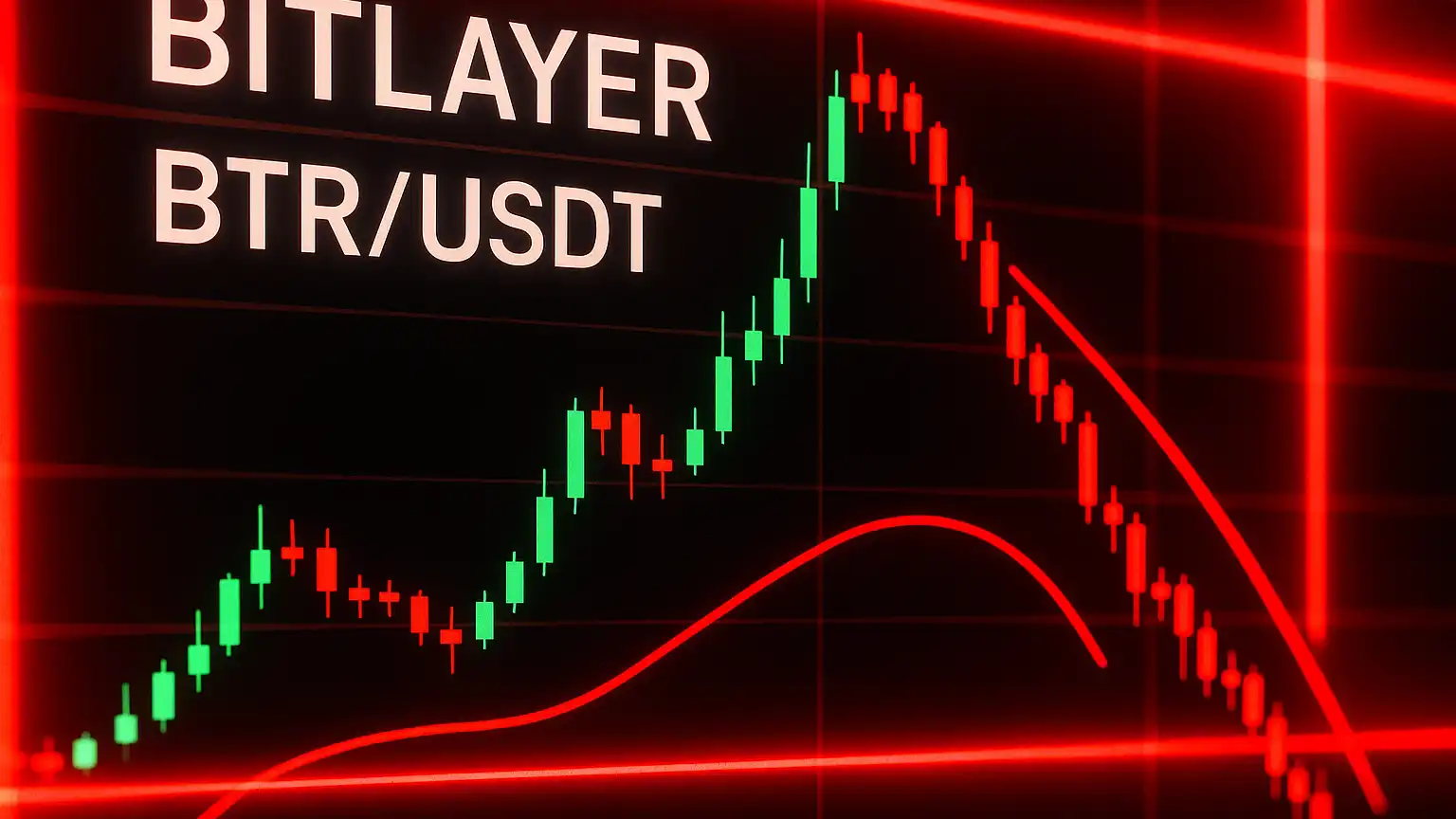
Right now, Bitlayer is trading around $0.1966. Over the last 24 hours, it’s up 7.10%, showing that bullish momentum is still alive and well. That said, history shows us that these surges often cool off when they hit major resistance areas. There’s a critical resistance zone sitting between $0.15 and $0.16 that’s acted as a ceiling before. With the current price above that level, the big question is whether support can hold or if things are getting a bit overheated.
Looking at moving averages, we’ve got a bullish setup as long as the price stays above the 50-day MA. If it crosses above the 200-day MA, that would signal a longer-term bullish trend taking shape. We don’t have detailed RSI and MACD data here, but traders should definitely keep an eye out for overbought conditions—like RSI pushing above 70—or a bearish MACD crossover that might hint at a pullback coming. Those earlier volume spikes during breakouts suggest real conviction behind the moves.
Important support levels to watch sit around $0.12 and $0.135. If we see a pullback, these zones could give buyers some decent entry opportunities. On the flip side, there’s resistance near $0.20 that’s both psychologically and technically important. Breaking through $0.22 to $0.24 could open the door toward $0.27-$0.30, but only if volume stays strong.
Trend & Volatility Insights
Volatility has definitely picked up in recent sessions, driven by catalysts like the tokenomics announcement and ecosystem expansion. This means wider price swings and faster movements. In this kind of environment, traders really need to think about risk management: setting stop-losses below support levels, sizing positions carefully, and watching for signs that volume is starting to dry up.
Near-Term Price Projections
With the bullish momentum and strong fundamentals we’re seeing, if BTR can hold above $0.18 with decent volume behind it, a reasonable target would be around $0.24 over the next few weeks. That’s assuming no major negative shocks hit the broader crypto markets and volume continues to look healthy.
Taking a more cautious view: we could see price pull back to the $0.15–$0.16 range for some consolidation, especially if momentum fades or the wider market gets choppy. From there, another run at the $0.22–$0.25 area would be on the cards. On the downside, if support fails below $0.12, that would expose BTR to some serious risk, potentially dropping toward $0.08.