Recent Developments & Market Context
RateX has come out of the gates swinging since launch. The project pulled in more than $10 million in funding, landed a December 2025 spot on Binance Alpha, and pushed nearly half of its 100 million token supply—around 44.18%—into community and ecosystem hands. All good news on paper, but the reality is a bit messier. We’re seeing the usual growing pains: wild price swings, early investors cashing out, and questions about when locked tokens will hit the market. The platform itself has real utility—yield trading, tokenized leverage, tighter Solana DeFi integrations—so the bones are solid. But right now, the whole space is dealing with regulators breathing down necks and investors getting skittish. People are playing it safe.
Technical Indicator Analysis & Key Levels
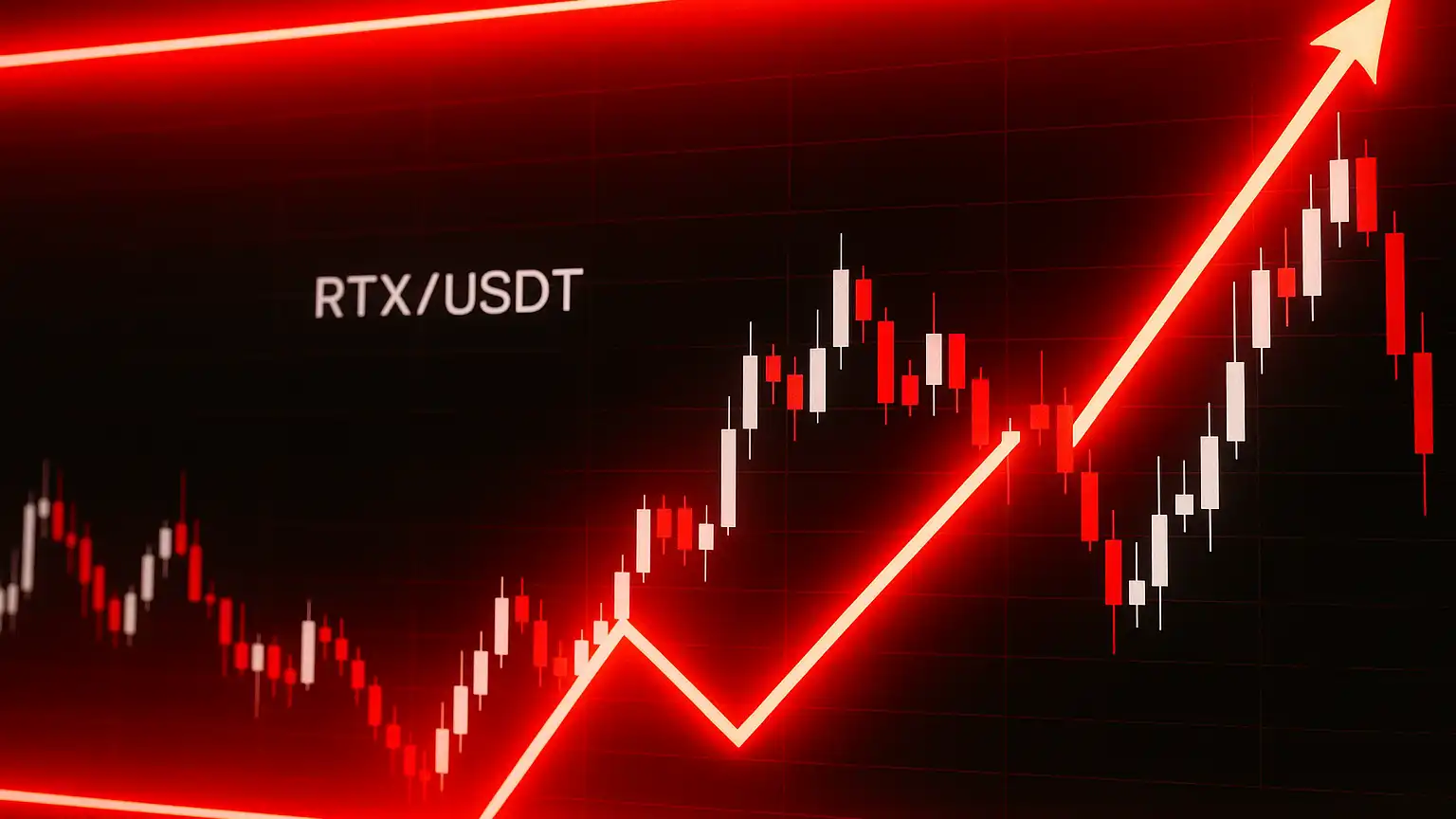
RTX is sitting around $2.26 USDT at the moment, down roughly 7% in the last 24 hours. Not a great look. The technicals tell a story that’s all over the place. On the daily chart, short-term moving averages—your 10- to 50-period EMAs and SMAs—are leaning bullish, saying “buy.” But zoom out to the 100- and 200-period averages, and they’re flashing red. The RSI is hovering in the mid-40s, not oversold but not strong either. MACD is barely negative, and Williams %R is creeping into oversold territory without giving us a clear signal that a bounce is coming. Volume has tapered off too, which means buyers aren’t exactly rushing in to scoop up these lower prices.
Support is hanging around $2.20 to $2.25 USDT—that’s where we’ve seen some previous lows and where short-term traders might jump back in. If that breaks, we’re looking at $2.00 USDT as the next psychological line in the sand. On the flip side, resistance is stacking up near $2.50 USDT first, then a tougher wall around $2.70 to $2.80 if sentiment improves and people actually start using the platform more. Any breakout past those levels needs serious volume behind it, or it’s just noise.
Price Prediction Scenarios & Risk Considerations
Looking at where we are now—price at $2.26, volume dropping, indicators giving mixed signals—and the broader market looking shaky, here’s how things could play out:
Bullish Scenario
If RTX can hold that $2.20 floor and buyers start showing up again—maybe the platform rolls out something exciting or yield farmers pile in—we could see a push back to $2.50. Break cleanly above $2.70 with daily volume north of $30 to $50 million, and suddenly $3.00 is back in play. This scenario needs good news though: platform upgrades, DAO governance kicking into gear, or juicier yields on popular assets.
Base Case
Most likely, we’re stuck in a range between $2.20 and $2.50 for a while. Indicators are neutral, short-term averages are giving some support for little rallies, but the longer-term averages and general market nervousness keep capping upside. Expect some slow grinding toward $2.40 or $2.50, but with plenty of dips back to support. Nothing exciting happens without a catalyst from outside.
Bearish Scenario
If selling picks up—whether from token unlocks hitting the market, the economy getting worse, or DeFi losing its shine—RTX could slip under $2.20 pretty easily. From there, $1.80 to $2.00 is on the table, with $2.00 being a major psychological support where buyers might finally step in. Break below that, and we’re in deeper trouble, where long-term investors would be looking for real value or waiting to accumulate over time.
Strategic Takeaways for Traders and Investors
If you’re thinking about getting in, wait for confirmation at the $2.20 support level—look for a reversal pattern like a hammer or bullish engulfing candle, and make sure volume is picking up. If you’re already holding, consider using trailing stops or keeping position sizes conservative. There’s real potential for sharp drops driven by sentiment shifts. Long positions make more sense once price clears $2.50 convincingly, and ideally you’d want to see the platform showing real growth to back up the move.
Risk-wise, the big worries are token unlocks flooding the market, a broader DeFi selloff, and the platform not delivering on yield or performance expectations. Keep an eye on the fundamentals: Total Value Locked, active users, APYs, new integrations. Technical charts are useful, but they only tell half the story if the underlying project isn’t holding up its end.